
Jeff Boelé · Elevated Performance
The Best Dynamic Warm Up for Runners: Including A-Skip, B-Skip, Leg Swings, and Thorasic Mobility
Jeff Boelé and the Elevated Performance team work with athletes and coaches. Learn how they can help you and your athletes. ElevatedPerformance.run
Video timestamps
Transcript
Recorded speech. Speaker names describe the source; individual speaking turns may vary.
00:00.12–00:03.71 uh we use it every day and this would be
00:03.72–00:06.29 the the shortest version of it I simply
00:06.30–00:08.87 call it warm up a there's a longer
00:08.88–00:10.49 version that's essentially the same
00:10.50–00:13.79 exercises plus a few more that we tack
00:13.80–00:16.43 on at the end and we do it for a longer
00:16.44–00:18.29 duration so normally we do this every
00:18.30–00:22.01 day for 20 meters and then the the
00:22.02–00:24.47 ground-based or stationary exercises we
00:24.48–00:27.23 do for eight reps
00:27.24–00:31.07 okay
00:31.08–00:35.03 so first exercise is low skips with arms
00:35.04–00:39.77 swinging forward
00:39.78–00:42.29 and we have low skips with arms swinging
00:42.30–00:45.05 backwards and by a low skip that's just
00:45.06–00:47.51 your run-of-the-mill
00:47.52–00:49.73 little kid out doing a skip because they
00:49.74–00:51.95 know how to
00:51.96–01:03.95 low skips with arms Crossing
01:03.96–01:06.53 and then a Skip With a Twist and then
01:06.54–01:09.43 the twist is a full 360 alternating
01:09.44–01:12.05 directions clockwise and then a couple
01:12.06–01:13.25 of forward skips and then
01:13.26–01:17.33 counterclockwise
01:17.34–01:20.15 and at this point then we move into a
01:20.16–01:25.49 backwards walk with the reach
01:25.50–01:28.31 and one thing we're we're watching for
01:28.32–01:31.91 is the reach isn't all all out like as
01:31.92–01:35.21 far as you can nor is it a small step
01:35.22–01:38.23 and this gives us an opportunity to
01:38.24–01:41.51 screen the anterior the front side of
01:41.52–01:42.47 the body
01:42.48–01:45.53 is there something limiting one leg
01:45.54–01:52.01 versus the other with the reach
01:52.02–01:54.95 right on the cone nice
01:54.96–02:08.23 then we move into a backward skip
02:08.24–02:17.87 and then butt kicks
02:17.88–02:22.61 then we move into some side shuffling
02:22.62–02:26.57 all these exercises can be a way to say
02:26.58–02:29.51 it would be expanded or contracted
02:29.52–02:34.69 so if an athlete has pain or discomfort
02:34.70–02:37.79 moving side to side these activities
02:37.80–02:41.33 could easily be be walked and so you can
02:41.34–02:42.67 still get
02:42.68–02:46.79 the movement just without without the
02:46.80–02:47.87 speed
02:47.88–02:50.29 with an athlete walking
02:50.30–02:52.55 leading with the left or the right leg
02:52.56–02:55.91 so then that was side side shuffle with
02:55.92–02:57.71 a jumping jack
02:57.72–02:59.63 and then we move into
02:59.64–03:04.37 karaoke
03:04.38–03:06.95 and both Christine and Maddie do a nice
03:06.96–03:11.51 job here with hip rotation
03:11.52–03:12.71 uh
03:12.72–03:17.63 oftentimes you'll see an athlete not
03:17.64–03:21.17 rotate the hips left to right and
03:21.18–03:23.33 they'll just they'll pull a leg forward
03:23.34–03:25.37 and then they don't do a good job of
03:25.38–03:27.71 actually rotating the hips back from
03:27.72–03:30.35 where they came from and so in that one
03:30.36–03:32.39 both both Christine and Maddie had good
03:32.40–03:36.11 hip rotation left to right
03:36.12–03:40.01 so after that we move into a quick skip
03:40.02–03:43.13 and this one can be a single leg quick
03:43.14–03:45.71 Skip and Maddie's going with her left
03:45.72–03:47.39 leg Christine is going with her right
03:47.40–03:51.41 leg on this one basically one leg has a
03:51.42–03:53.57 greater path to travel and the other leg
03:53.58–03:56.27 is a little bit more like a pogo stick
03:56.28–03:59.03 and we want to see good dorsiflexion and
03:59.04–04:00.65 that would be true on all of these
04:00.66–04:03.47 exercises we want to see and
04:03.48–04:06.23 dorsiflexion his toe pointed towards
04:06.24–04:08.51 knee plantar flexion would be toe
04:08.52–04:11.63 pointed away
04:11.64–04:13.79 and so we had a single leg left single
04:13.80–04:15.47 leg right and now we have an alternating
04:15.48–04:21.05 quick skip
04:21.06–04:24.23 with both of these I'd say both athletes
04:24.24–04:26.63 could have a little bit more roll with a
04:26.64–04:29.39 heel to toe but that's but that's not
04:29.40–04:31.19 too bad that could be an indicator of
04:31.20–04:34.27 some kind of calf or hamstring tightness
04:34.28–04:36.77 which could be residual from the workout
04:36.78–04:38.99 we did yesterday so that's the first
04:39.00–04:44.17 segment of the warm-up which is lower
04:44.18–04:46.67 lower range of motion lower speed
04:46.68–04:48.59 activities kind of the low skips to
04:48.60–04:50.51 where at the end it's the single leg
04:50.52–04:54.05 skip so a little a little bit more range
04:54.06–04:56.15 of motion a little bit quicker on that
04:56.16–04:59.09 from here we'll move into stationary or
04:59.10–05:01.73 grout and some ground-based Dynamic
05:01.74–05:03.89 flexibility exercises
05:03.90–05:06.17 after we've done the first part of the
05:06.18–05:10.31 warm-up which is uh the the mobility
05:10.32–05:13.01 exercises with the variety of skipping
05:13.02–05:15.83 and the lateral shuffling then we moved
05:15.84–05:18.41 to stationary and ground-based dynamic
05:18.42–05:20.45 flexibility and the first thing we'll do
05:20.46–05:25.67 is leg swings
05:25.68–05:29.53 so athletes will do eight each leg
05:29.54–05:33.05 facing the fence or in this case the
05:33.06–05:35.69 goal post
05:35.70–05:38.41 and then they would do eight each leg
05:38.42–05:46.31 with the facing the the sides so
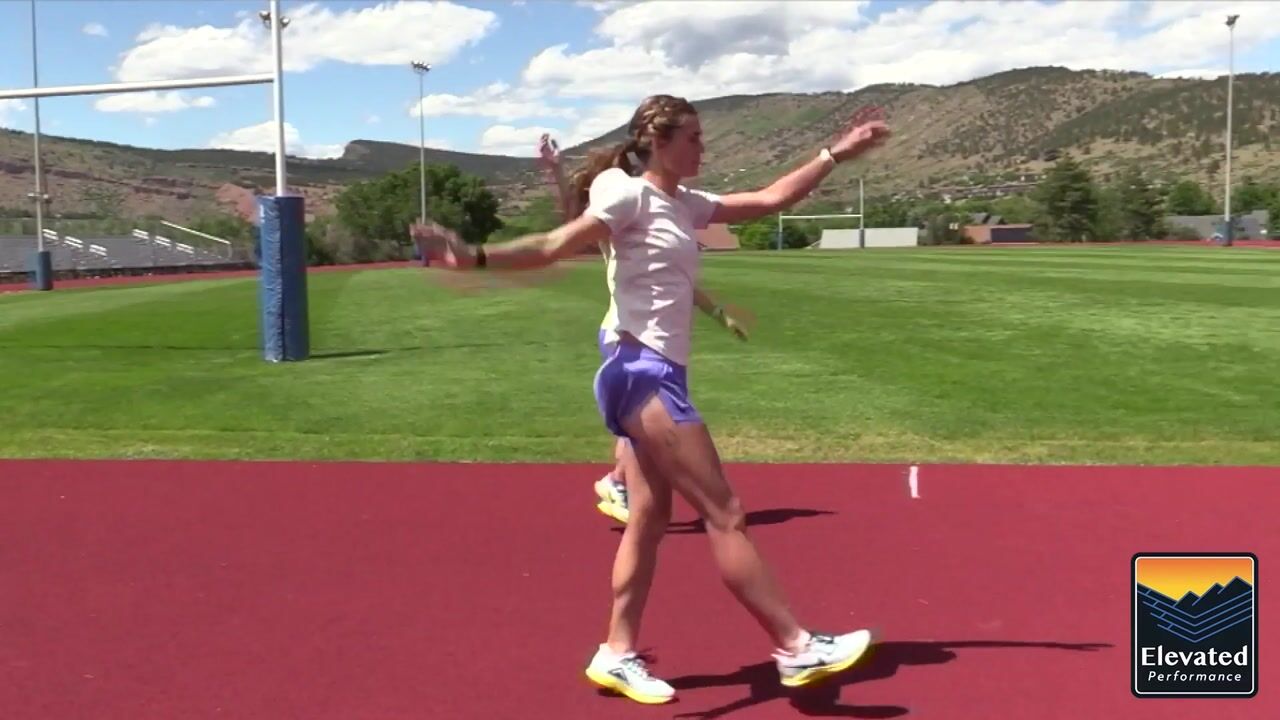
05:46.32–05:48.71 Maddie's turning there
05:48.72–05:50.39 Chris turning
05:50.40–05:53.29 and it's important that
05:53.30–05:58.43 oftentimes uh on the back so when when
05:58.44–06:00.83 the foot comes behind the body or across
06:00.84–06:02.05 the body
06:02.06–06:05.27 the athlete will slow down and not go
06:05.28–06:08.03 through the full range of motion and so
06:08.04–06:09.77 both Christine and Maddie are doing a
06:09.78–06:13.13 nice job with with the the leg behind
06:13.14–06:18.23 the body which is then a quad hip flexor
06:18.24–06:19.49 stretch
06:19.50–06:23.51 then we'll move into uh hurdle Trail leg
06:23.52–06:26.51 and there's going to be forward and
06:26.52–06:29.69 backward here on both legs
06:29.70–06:32.75 and one thing we're watching for is we
06:32.76–06:36.71 want to see the knee stay above the foot
06:36.72–06:54.83 with the forward and back
06:54.84–06:58.07 how's right side feeling today Maddie
06:58.08–07:06.05 pretty good okay
07:06.06–07:08.69 some folks will will when they do this
07:08.70–07:11.93 thrill drill they'll emphasize kind of a
07:11.94–07:13.73 fast leg into the ground we're not doing
07:13.74–07:16.91 any of that here the whole point of the
07:16.92–07:19.97 hurdle Trail Lake is a is a forward and
07:19.98–07:22.73 backward hit Mobility so we're not
07:22.74–07:24.47 trying to work on any kind of specific
07:24.48–07:26.93 hurdle technique with that
07:26.94–07:30.97 okay next we'll move into eagles
07:30.98–07:34.79 which is essentially Standing Tall with
07:34.80–07:36.71 arms out to the side
07:36.72–07:39.23 and then athletes are going to bring the
07:39.24–07:44.21 opposite foot up to the opposite hand
07:44.22–07:47.75 so there's a bit of a coordinative piece
07:47.76–07:50.57 here but also hamstring glute and a
07:50.58–07:52.55 rotational component
07:52.56–07:55.79 after that we'll move into side bends
07:55.80–08:00.35 and on this one the athletes imagining a
08:00.36–08:02.51 line extending through their spine above
08:02.52–08:04.49 their head and down through their legs
08:04.50–08:07.25 and they're reaching towards that line
08:07.26–08:12.17 towards center with both up and down and
08:12.18–08:14.87 then there's also a little tip
08:14.88–08:17.33 to the side here and that's where the
08:17.34–08:18.89 side Bend is and so there's going to be
08:18.90–08:22.25 a stretching and engagement through
08:22.26–08:24.77 tricep through serratus muscles through
08:24.78–08:27.71 the side of the body
08:27.72–08:30.83 okay
08:30.84–08:38.51 we'll move into table position exercises
08:38.52–08:41.51 and so this one I think people have
08:41.52–08:43.93 different names we just call it
08:43.94–08:46.61 camel and old horse
08:46.62–08:50.23 so it's a arching of the back
08:50.24–08:54.79 and then a
08:54.80–08:57.53 extension extension inflection of the
08:57.54–08:59.15 spine basically
08:59.16–09:04.85 and then we'll move into a cat cobra
09:04.86–09:10.61 so stretching back
09:10.62–09:13.25 and then athlete is going to come
09:13.26–09:16.13 forward with hips on the ground and then
09:16.14–09:17.63 there's going to be a good anterior
09:17.64–09:21.35 stretch
09:21.36–09:29.57 with the cat cobra
09:29.58–09:31.43 and then we're going to go reach through
09:31.44–09:33.89 and reach up so now we have a rotational
09:33.90–09:36.71 component
09:36.72–09:38.39 and
09:38.40–09:41.21 one thing we want to see is the hand
09:41.22–09:44.27 that's reaching up the athlete looking
09:44.28–09:46.97 towards that hand so we have a cervical
09:46.98–09:49.49 spine and thoracic spine engagement and
09:49.50–09:53.27 rotation there
09:53.28–09:55.79 and then to reach through it's not
09:55.80–09:58.07 imperative to reach as far as you can
09:58.08–10:00.11 but you do want a good
10:00.12–10:02.93 a good reach both through and up and
10:02.94–10:05.27 this is where you could see differences
10:05.28–10:08.39 one side to the next and that could be
10:08.40–10:11.63 an indicator of some kind of tightness
10:11.64–10:14.27 through the back through a hip that
10:14.28–10:15.95 could be addressed with therapy or self
10:15.96–10:19.07 therapy
10:19.08–10:22.67 next we have fire hydrants
10:22.68–10:25.97 and athletes trying to keep hips fairly
10:25.98–10:27.05 Square
10:27.06–10:30.83 and then lift leg
10:30.84–10:34.07 to where it's going to remain
10:34.08–10:37.85 essentially parallel with the ground
10:37.86–10:44.27 as it comes up
10:44.28–10:50.03 and then we'll move into donkey kicks
10:50.04–10:52.01 and you can see a difference Christine
10:52.02–10:53.63 has a little bit more movement through
10:53.64–10:55.67 her back Maddie's a little bit more
10:55.68–10:58.07 stationary in that
10:58.08–11:01.31 I wouldn't necessarily say one is
11:01.32–11:04.13 correct and one isn't it's just going to
11:04.14–11:06.83 be individual differences with the
11:06.84–11:08.23 athlete
11:08.24–11:10.19 potentially where an athlete has
11:10.20–11:11.93 restrictions potentially what an
11:11.94–11:13.91 athlete's comfortable doing
11:13.92–11:17.09 and then last we'll have low whips and
11:17.10–11:18.59 with the low whips The Athlete's going
11:18.60–11:20.33 to move outside their body and then
11:20.34–11:22.39 across their body and touching the toe
11:22.40–11:30.41 on either side
11:30.42–11:32.39 so all those we would call those a table
11:32.40–11:35.33 position meaning on all fours and so
11:35.34–11:37.07 that's where all the ground-based stuff
11:37.08–11:39.41 initiates from that position on all
11:39.42–11:40.43 fours
11:40.44–11:42.47 and then that's the dynamic flexibility
11:42.48–11:46.67 portion of the warm-up
11:46.68–11:50.21 parking lot or a Trailhead that's got
11:50.22–11:53.21 how does this work then uh so one option
11:53.22–11:55.79 uh that that most athletes have is they
11:55.80–11:58.67 have a old yoga mat or a towel with them
11:58.68–12:00.47 and so you can you can put that out or
12:00.48–12:02.27 like here at the track we don't have
12:02.28–12:04.45 those mats so we we've got some grass
12:04.46–12:07.49 and I guess in a pinch you just tough it
12:07.50–12:10.13 out and kneel on some on some rocks but
12:10.14–12:13.31 typically a a small towel or or yoga mat
12:13.32–12:15.35 gets the job done
12:15.36–12:16.55 [Music]
12:16.56–12:19.25 athletes to memorize everything we've
12:19.26–12:22.13 seen up to this point
12:22.14–12:25.63 I can't memorize anything
12:25.64–12:28.43 yeah about a week of doing it every day
12:28.44–12:30.59 I can't memorize anything so I write it
12:30.60–12:32.45 down but the athletes doing it every day
12:32.46–12:34.91 yeah roughly a week
12:34.92–12:37.37 yeah and then and and just to be clear
12:37.38–12:40.01 you do this before every workout whether
12:40.02–12:42.17 it's a threshold run or a long run or an
12:42.18–12:43.91 easy day correct
12:43.92–12:45.89 yep it's a star it's our standard
12:45.90–12:47.69 starting we don't do any running before
12:47.70–12:51.17 it we do this to start and then we would
12:51.18–12:53.87 go do our easy running before doing a
12:53.88–12:56.15 workout or we do this before going out
12:56.16–12:57.95 and doing our easy run or this before
12:57.96–13:00.23 going out and doing our long run this is
13:00.24–13:03.47 this is the starting point
13:03.48–13:05.63 thank you yeah
13:05.64–13:08.81 okay
13:08.82–13:12.29 last portion of the warm-up is Sprint
13:12.30–13:15.59 mechanics and this is the shortest
13:15.60–13:17.03 portion of the warm-up so we're going to
13:17.04–13:20.27 go through first starting with an a
13:20.28–13:25.37 March and a skips B skips C skips most
13:25.38–13:27.19 athletes have heard of those
13:27.20–13:30.05 initiated by Gerard mock Canadian Sprint
13:30.06–13:31.39 coach
13:31.40–13:35.45 so for us we're going through a slow
13:35.46–13:37.67 with the a March and then we're coming
13:37.68–13:41.39 back with the a Skip and the a position
13:41.40–13:44.63 is essentially the lower leg staying
13:44.64–13:48.29 engaged and we want to see good Shin
13:48.30–13:51.13 angles meaning the shin or the shank
13:51.14–13:54.53 perpendicular to the ground and this is
13:54.54–13:56.33 really where we want to see dorsiflexion
13:56.34–14:00.47 so a rolling contact Heel To Toe after
14:00.48–14:03.11 the a skip a March and a skip we're
14:03.12–14:05.87 going to move into a b March and B Skip
14:05.88–14:07.33 and the B
14:07.34–14:11.57 the lower leg is going to be opened up
14:11.58–14:17.45 and so the the swing phase of of a run
14:17.46–14:19.73 is going to be initiated but we still
14:19.74–14:22.07 want the dorsiflexion we still want the
14:22.08–14:26.45 content contact happening under the body
14:26.46–14:28.61 so both these athletes do this really
14:28.62–14:30.53 well that
14:30.54–14:34.07 That Swing portion doesn't initiate
14:34.08–14:38.51 until the thigh starts pushing down
14:38.52–14:40.37 um one second I want to try to
14:40.38–14:43.99 demonstrate a very common
14:44.00–14:48.47 very common error and that's as the leg
14:48.48–14:50.93 is coming up so what we want to see is
14:50.94–14:53.59 we want to see the thigh come up block
14:53.60–14:57.17 and then as the thigh starts coming back
14:57.18–15:00.95 down the lower leg is going to swing
15:00.96–15:03.83 and then contact happening really close
15:03.84–15:06.29 under the center of mass a very common
15:06.30–15:09.53 air is for the athlete to come up and
15:09.54–15:12.29 then kick and then come back down and
15:12.30–15:14.51 we're not the Rockettes we're not on
15:14.52–15:17.39 Broadway and so we want the thigh to
15:17.40–15:20.69 come up and then a forceful initiation
15:20.70–15:25.31 down causing a pendulum effect and then
15:25.32–15:27.17 the foot to come back under the center
15:27.18–15:28.67 of mass
15:28.68–15:31.01 or very close to it if we landed right
15:31.02–15:34.37 under we'd fall in our face so uh so
15:34.38–15:36.41 that's that's the Sprint mechanics the
15:36.42–15:39.41 last thing we'll end with uh are two
15:39.42–15:44.21 ankle dribbles and we can go
15:44.22–15:46.73 so dribbles are a truncated running
15:46.74–15:48.95 movement
15:48.96–15:51.95 and basically uh
15:51.96–15:54.29 a couple different ways to explain these
15:54.30–15:57.17 and we'll do a walk back recovery and by
15:57.18–15:59.69 ankle what we mean by ankle dribbles is
15:59.70–16:01.73 the athletes are stepping over their
16:01.74–16:04.73 ankles so one thing to imagine would be
16:04.74–16:08.75 that you have a stick that runs through
16:08.76–16:11.39 your malleoli and you have to step over
16:11.40–16:14.93 that with very small steps another thing
16:14.94–16:17.27 to think about would be going up six
16:17.28–16:20.39 inch stairs and if you take too big of a
16:20.40–16:22.73 step in front of you you would bash your
16:22.74–16:25.67 toes into a stair so we're looking for
16:25.68–16:29.15 small eccentric circles as we go through
16:29.16–16:31.91 and these could very easily be walked
16:31.92–16:34.43 would you two mind do a walking dribble
16:34.44–16:35.21 back
16:35.22–16:38.03 and that's a really good place to start
16:38.04–16:39.47 teaching
16:39.48–16:41.81 because it's really good you can see the
16:41.82–16:43.73 really good Heel To Toe rolling that
16:43.74–16:50.99 Chris has as an athlete just steps over
16:51.00–16:52.85 and shin angles are good and
16:52.86–16:55.55 perpendicular with the ground so that's
16:55.56–16:57.59 a really good starting point again kind
16:57.60–16:59.27 of going back to a point from earlier
16:59.28–17:01.79 all of these exercises you can expand
17:01.80–17:04.49 and contract maybe an athlete can't move
17:04.50–17:07.85 to an a skip or an a run which we're not
17:07.86–17:10.37 doing in this in this warm-up but they
17:10.38–17:12.71 can do the a March and so you can start
17:12.72–17:14.93 there so same with dribbles it may be
17:14.94–17:16.97 more effective to have an athlete learn
17:16.98–17:19.79 foot contacts and shin angles and kind
17:19.80–17:22.25 of these small concentric circles by
17:22.26–17:25.73 doing walking dribbles over the ankle or
17:25.74–17:27.47 over the calf before they actually start
17:27.48–17:29.39 adding speed to that
17:29.40–17:31.55 and that's the third and final section
17:31.56–17:34.01 of the warm-up are Sprint mechanics and
17:34.02–17:37.61 from at this point we would now we'd be
17:37.62–17:39.35 checking in and at this point is where
17:39.36–17:42.05 we would do any self therapy or therapy
17:42.06–17:43.43 with the therapist that's there at
17:43.44–17:45.65 practice before heading out for the Run
17:45.66–17:47.39 assignment of the day be it a long run
17:47.40–17:50.69 easy run or a running warm-up before a
17:50.70–17:52.97 harder workout
17:52.98–17:55.25 how long does it teach would it take to
17:55.26–17:56.69 going back to our two high school
17:56.70–17:58.19 athletes our new athlete who's a
17:58.20–17:59.81 freshman or older athlete who's been in
17:59.82–18:01.43 the program a couple years how long
18:01.44–18:04.13 would it take them to execute with let's
18:04.14–18:06.35 say a grade of a b or a B plus
18:06.36–18:09.29 everything we just saw in terms of these
18:09.30–18:10.79 Sprint drills
18:10.80–18:14.39 it's a that's a big Spectrum
18:14.40–18:16.73 um and to be perfectly Frank I think
18:16.74–18:19.13 athletes that maybe have more of an
18:19.14–18:21.77 athletic background uh so maybe more
18:21.78–18:23.39 kinesthetic awareness are going to pick
18:23.40–18:25.43 up on some of these movements and then
18:25.44–18:27.95 maybe you have kind of those beginner
18:27.96–18:31.31 athletes in the program and so maybe
18:31.32–18:32.75 they're going through a growth spurt
18:32.76–18:34.73 cognitive abilities are a little bit
18:34.74–18:37.37 lower and it's it's feasible that it
18:37.38–18:39.05 might take that athlete the entire
18:39.06–18:42.23 season to really dial in all these
18:42.24–18:45.31 activities if I were picking
18:45.32–18:48.59 uh teaching points I would say the most
18:48.60–18:50.27 important thing that you you could ask
18:50.28–18:53.27 an athlete to do in in every exercise is
18:53.28–18:55.73 is the dorsiflexion so toe pointed
18:55.74–18:58.13 towards knee and not pointed down so we
18:58.14–19:00.23 want to be here and trying to have that
19:00.24–19:02.87 rolling contact with with every exercise
19:02.88–19:07.19 be it be it the skipping or uh or on the
19:07.20–19:10.13 the a skip so that's a that's the first
19:10.14–19:12.59 point of teaching but more than anything
19:12.60–19:16.25 I I like athletes to get the Rhythm and
19:16.26–19:18.23 and the coordinative element down before
19:18.24–19:20.33 we start before I start picking apart
19:20.34–19:22.73 the technical aspects
19:22.74–19:25.19 what why why should a why should a high
19:25.20–19:28.07 school distance Runner do such of a to
19:28.08–19:30.47 do this longer warm-up and why should
19:30.48–19:33.59 they specifically do this this last part
19:33.60–19:35.93 that they've seen their friends who are
19:35.94–19:38.27 sprinters on the track team do yeah so
19:38.28–19:41.27 so I think the first part uh uh So
19:41.28–19:44.45 Christine and Maddie's roommate uh is is
19:44.46–19:46.25 known to watch them do the warm-up
19:46.26–19:48.43 before going on a run with them
19:48.44–19:52.07 and the joke is that well that the first
19:52.08–19:53.57 mile you're supposed to feel like
19:53.58–19:55.91 garbage and Christine and Maddie
19:55.92–19:57.89 sometimes they feel like garbage in the
19:57.90–19:59.87 first mile but after taking that 12 to
19:59.88–20:02.57 15 minutes to do the warm-up they're
20:02.58–20:04.73 they're online they're ready to go they
20:04.74–20:07.19 don't have this period of kind of
20:07.20–20:08.81 slogging around getting their bodies
20:08.82–20:11.29 going and they can go out and execute
20:11.30–20:15.23 biomechanically in in better better in
20:15.24–20:17.63 better positions so that would I would
20:17.64–20:19.61 say would be would be one reason it gets
20:19.62–20:21.59 you dialed in it gets you ready to go
20:21.60–20:23.69 right ready to exercise yes and then
20:23.70–20:26.03 that last part what we're seeing what
20:26.04–20:27.53 they might be seeing their their
20:27.54–20:30.35 Sprinter friends doing a really good
20:30.36–20:33.17 reason for that is uh I guess I would
20:33.18–20:35.09 say is because as distance owners we
20:35.10–20:37.07 want to be fast too we want our central
20:37.08–20:40.01 nervous systems to be online we want to
20:40.02–20:43.37 execute movements efficiently we want to
20:43.38–20:46.85 execute movements in in ways that are
20:46.86–20:49.31 going to produce good force that are
20:49.32–20:51.47 going to help us move faster and so if
20:51.48–20:53.39 something like a warm-up kind of teaches
20:53.40–20:55.73 us good postural positions that's
20:55.74–20:58.61 something that that we want to do also
20:58.62–21:00.35 as a distance runner for something like
21:00.36–21:02.87 the dribbles that's a really good
21:02.88–21:04.67 activity to start getting your central
21:04.68–21:07.49 nervous system online because when you
21:07.50–21:10.55 can do those faster the the ground
21:10.56–21:12.89 contacts happen pretty quick and then
21:12.90–21:14.63 and then you're ready to go
21:14.64–21:17.45 Jeff why is why is the dorsiflexion
21:17.46–21:20.51 important on on that last there's last
21:20.52–21:23.45 portions we saw yeah so this is this is
21:23.46–21:25.13 potentially for some people a
21:25.14–21:27.19 controversial topic
21:27.20–21:30.77 dorsiflexion so if you're if your foot
21:30.78–21:34.67 is in in that position and you're
21:34.68–21:36.23 running
21:36.24–21:39.77 the speed that you're going your foot is
21:39.78–21:41.93 going to self-select where it lands and
21:41.94–21:43.79 there's been a lot of debate and there's
21:43.80–21:45.29 literature out there that talks about
21:45.30–21:48.23 foot strike and how you should land and
21:48.24–21:50.81 I'm I'm a firm believer that the
21:50.82–21:52.61 velocity that you're traveling is going
21:52.62–21:54.89 to dictate where your foot lands so
21:54.90–21:56.63 whether that's further back closer to
21:56.64–21:58.73 your heel closer to your midfoot or
21:58.74–22:01.13 closer to your forefoot being in a
22:01.14–22:03.95 dorsiflex position allows your body to
22:03.96–22:06.83 self-select based on the speed that
22:06.84–22:08.21 you're traveling and the terrain that
22:08.22–22:10.19 you're on where it's going to be most
22:10.20–22:12.89 effective to contact to impart Force
22:12.90–22:15.65 into the ground the slower you go the
22:15.66–22:17.63 more time your body needs to impart
22:17.64–22:19.73 Force you're going to land further back
22:19.74–22:23.69 the faster you're going Usain bolts bolt
22:23.70–22:25.97 style is a sprinter the farther forward
22:25.98–22:27.41 you're going to land on your foot
22:27.42–22:29.27 because you literally don't have as much
22:29.28–22:31.73 time to be on the ground because of how
22:31.74–22:33.77 fast your center of mass is going so
22:33.78–22:36.23 dorsiflexion and learning dorsiflexion
22:36.24–22:38.39 sets up the ability for the body to do
22:38.40–22:40.61 the best job they can to determine where
22:40.62–22:41.93 it needs to land
22:41.94–22:45.80 thanks so much Jeff yeah